

Article Plan: Air Compressor 919.165310 Manual

This comprehensive guide details the Craftsman 919.165310 air compressor, offering safety protocols, operational instructions, and manual access for effective use and repair.
Welcome to the definitive guide for your Craftsman 919.165310 air compressor! This manual serves as an essential resource, providing crucial information for safe operation, effective maintenance, and successful troubleshooting. Whether you’re a seasoned professional or a first-time user, understanding your compressor is paramount.
This document consolidates vital details, including component identification, step-by-step instructions, and readily available resources for replacement parts. Accessing the owner’s manual in PDF format is now easier than ever, ensuring you always have the support you need. Proper use extends the life of your tool and guarantees optimal performance.
What is the Craftsman 919.165310 Air Compressor?
The Craftsman 919.165310 is a portable air compressor designed for a variety of applications, from inflating tires to powering pneumatic tools. It’s a popular model within the 919 series, known for its reliability and user-friendly operation. Many owners seek rebuild guides, like the one at toddfun.com, demonstrating its potential for longevity with proper care.
This compressor typically features an oil-free pump, reducing maintenance needs. Finding replacement parts for the 919 series is readily achievable, ensuring continued functionality. Understanding its components, as detailed in the owner’s manual, is key to maximizing its performance and addressing potential issues effectively.
Importance of the Manual
The owner’s manual for the Craftsman 919.165310 air compressor is absolutely crucial for safe and efficient operation. It provides essential safety guidelines, preventing accidents and ensuring user well-being. Detailed instructions cover assembly, operation, maintenance, and troubleshooting, maximizing the compressor’s lifespan.
Accessing a downloadable PDF version, as readily available online, allows for convenient reference. The manual outlines proper procedures for oil changes (if applicable), filter cleaning, and identifying common issues like low pressure or airflow problems. Ignoring the manual can lead to damage, void warranties, and compromise safety.

Safety First
Prioritize safety by carefully reviewing all warnings and guidelines within the manual before operating the Craftsman 919.165310 air compressor.
General Safety Warnings
Always disconnect the power source before performing any maintenance or repairs on the Craftsman 919.165310 air compressor. Never operate the compressor if damaged. Ensure adequate ventilation during operation to prevent heat buildup. Avoid directing airflow towards people or flammable materials. Wear appropriate eye and ear protection. Do not alter the safety valve or pressure settings. Keep the work area clean and free of obstructions. Inspect hoses and fittings regularly for damage. Be mindful of potential noise levels and take necessary precautions. Read the entire manual before use to understand all safety precautions.
Electrical Safety Guidelines
Always ensure the power supply voltage matches the compressor’s specifications. Use a grounded outlet and avoid extension cords if possible; if required, use a heavy-duty cord. Never operate the Craftsman 919;165310 with a damaged power cord or plug. Inspect the cord regularly for wear and tear. Avoid exposing the compressor to wet conditions. Do not attempt electrical repairs yourself; consult a qualified electrician. Disconnect the power before inspecting or changing any electrical components. Ensure the power switch is in the “off” position before plugging in. Follow all local electrical codes;
Pressure Vessel Safety
Never modify the air tank in any way, including welding or drilling. Always ensure the safety valve is functioning correctly; test it periodically. Do not exceed the maximum pressure rating (PSI) of the tank. Inspect the tank regularly for signs of rust, corrosion, or damage. Drain the tank completely after each use to prevent internal corrosion. Replace the tank if any damage is detected. Follow the manufacturer’s recommended inspection schedule. Ensure all fittings and connections are tight and leak-free. Never paint or coat the inside of the tank. Adhere to all safety guidelines.
Understanding the Components
This section details the Craftsman 919.165310’s key parts – tank, motor, pump, regulator, gauge, hoses, and fittings – with a helpful diagram included.
Air Compressor Diagram ⏤ 919.165310
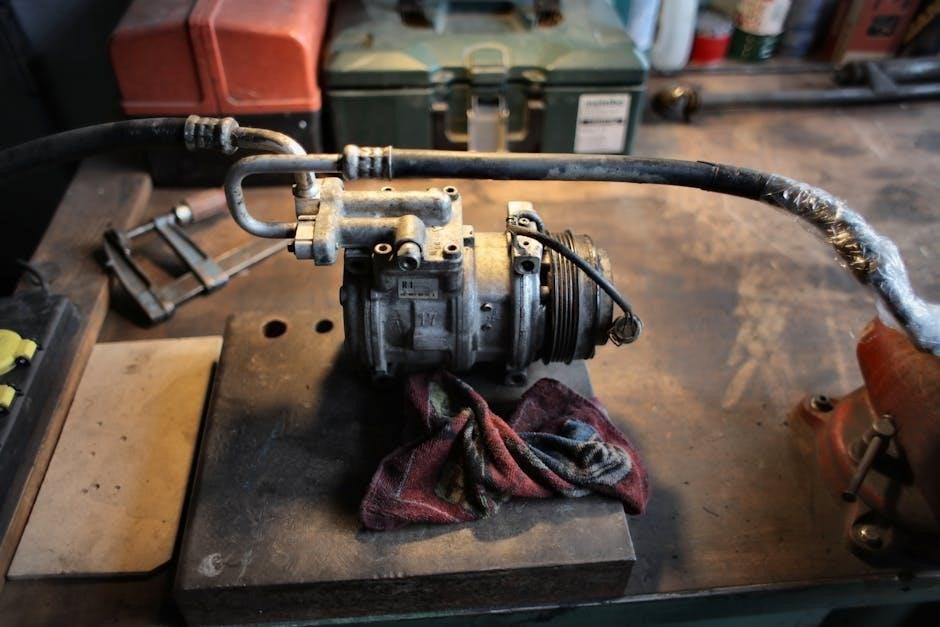
A detailed visual representation of the Craftsman 919.165310 air compressor is crucial for understanding its internal workings and component locations. The diagram clearly labels the pressure vessel (tank), the electric motor powering the pump, and the pump itself responsible for air compression.
Key elements highlighted include the regulator, controlling output pressure, and the pressure gauge for monitoring PSI. The diagram also showcases the air outlet, hoses, and various fittings connecting these components. Referencing this diagram alongside the parts identification section will greatly assist in maintenance, troubleshooting, and repair procedures, ensuring safe and effective operation of your air compressor.
Key Parts Identification
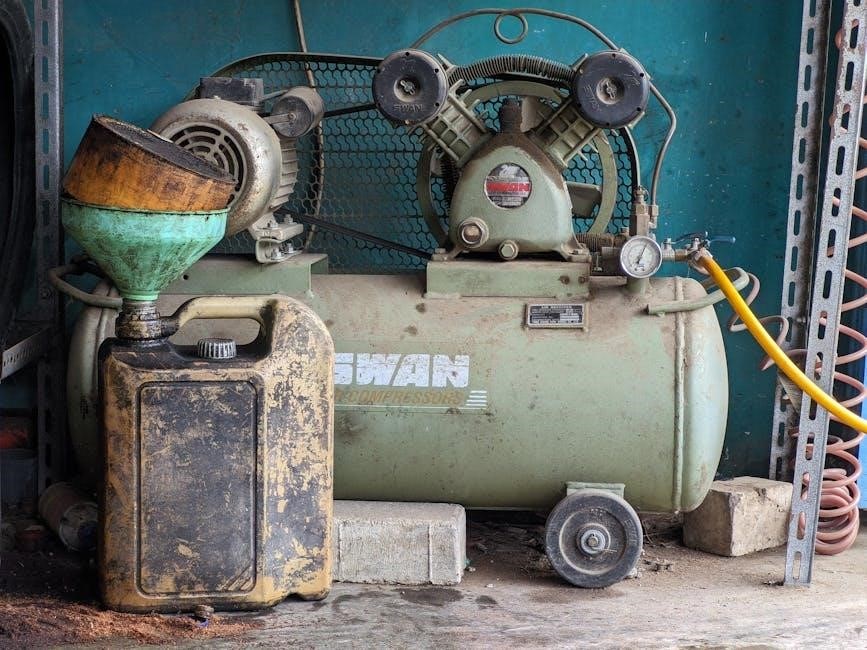
Understanding each component of the Craftsman 919.165310 is vital for safe operation and maintenance. The tank stores compressed air, while the motor provides the power. The pump is responsible for compressing atmospheric air into the tank.
The regulator & gauge control and display the output air pressure. Hoses & fittings connect the compressor to tools. The safety valve prevents over-pressurization. Proper identification of these parts, alongside the compressor diagram, is essential for troubleshooting, repairs, and locating replacement parts within the 919 series, ensuring optimal performance and longevity.
Tank
The air tank is a crucial pressure vessel within the Craftsman 919.165310 compressor, storing compressed air for powering pneumatic tools. Constructed from robust steel, it’s designed to withstand significant pressure, adhering to strict safety standards.
Regular inspection for rust or damage is paramount. Never modify or repair the tank independently; professional welding or replacement is required. The tank’s capacity directly influences the compressor’s runtime. Maintaining a dry interior prevents corrosion and ensures longevity. Always adhere to the maximum PSI rating indicated on the tank itself for safe operation.
Motor
The motor is the powerhouse of the Craftsman 919.165310 air compressor, converting electrical energy into mechanical motion to drive the pump. It’s vital to ensure proper voltage and amperage supply, as specified in the technical specifications section of this manual.
Overheating can occur with prolonged use; allow the motor to cool down periodically. Regularly check for unusual noises or vibrations, indicating potential issues. Keep the motor’s ventilation ports clear of debris to prevent overheating and maintain optimal performance. Never operate a damaged motor.
Pump
The pump is responsible for drawing in atmospheric air and compressing it, increasing its pressure for storage within the tank. This component directly impacts the compressor’s airflow (CFM) and maximum PSI capabilities. Inspect the pump regularly for signs of wear or damage, such as leaks or unusual noises.
Proper lubrication (if applicable, see oil change section) is crucial for pump longevity. Ensure the pump is adequately cooled during operation, avoiding prolonged use at maximum capacity. A malfunctioning pump will significantly reduce compressor performance.
Regulator & Gauge
The regulator controls the output air pressure delivered to tools and accessories, allowing adjustment to suit specific application needs. The gauge displays the current air pressure within the tank and the regulated output pressure. Regularly check the gauge for accuracy, ensuring it provides reliable readings.
Adjusting the regulator involves turning a knob to increase or decrease pressure. Always verify the set pressure before connecting tools. A faulty regulator can lead to inconsistent performance or damage to equipment. Save this manual for future reference.
Hoses & Fittings
Air hoses connect the compressor to pneumatic tools, transmitting compressed air for operation. Ensure hoses are rated for the compressor’s maximum PSI and are free from cracks, kinks, or abrasions. Fittings securely connect hoses to both the compressor and tools, preventing air leaks and maintaining pressure.
Inspect fittings regularly for tightness and corrosion. Use appropriate thread sealant when connecting fittings to avoid leaks. Damaged hoses or fittings can pose safety hazards and reduce compressor efficiency. Find the parts you need for repair!
Operation Instructions
Follow these steps for safe and efficient operation: initial setup, starting procedures, pressure adjustments, and proper shutdown techniques, as outlined in this manual.
Initial Setup
Before first use, carefully inspect the Craftsman 919.165310 air compressor for any shipping damage. Ensure all components are present, referencing the parts diagram within this manual. Position the compressor on a stable, level surface with adequate ventilation.
Connect the appropriate power source, verifying voltage compatibility. Before connecting air tools, drain any condensation from the tank by opening the drain valve – this is crucial for optimal performance. Check all fittings and hoses for secure connections to prevent air leaks. Familiarize yourself with the location of the safety valve and pressure gauge, as detailed in the provided diagrams.
Always refer to the complete manual for detailed illustrations and safety precautions during this initial setup phase.
Starting the Compressor
To initiate operation of your Craftsman 919.165310 air compressor, ensure the power switch is set to the “OFF” position. Verify the drain valve is closed tightly to maintain tank pressure. Connect the air hose to your desired tool, ensuring a secure fit. Then, plug the compressor into a grounded electrical outlet matching the specified voltage.
Switch the power to “ON”. The compressor will automatically begin filling the tank. Monitor the pressure gauge; the compressor will cycle on and off to maintain the set pressure. Refer to the manual for recommended break-in procedures. Never operate the compressor without all safety features in place.
Adjusting Air Pressure
Precisely controlling air pressure is crucial for optimal tool performance and safety with your Craftsman 919.165310 compressor. Locate the regulator knob on the compressor. Before adjusting, ensure the compressor has reached its maximum pressure and then shut it off.
Turn the regulator knob clockwise to increase pressure and counter-clockwise to decrease it. Continuously monitor the pressure gauge while adjusting to achieve the desired PSI for your tool. Always refer to your tool’s manual for recommended pressure settings. Avoid exceeding the maximum PSI rating of both the compressor and your connected tools.
Shutting Down the Compressor
Proper shutdown is essential for extending the life of your Craftsman 919.165310 air compressor and ensuring safety. First, disconnect any air tools connected to the compressor. Turn the compressor switch to the “OFF” position. Allow the compressor to fully depressurize; this may take a few moments.
Never attempt to move or service the compressor while it still contains pressurized air. Once the pressure gauge reads zero, you can safely disconnect the power cord. Store the compressor in a clean, dry location. Refer to the manual for long-term storage guidelines.
Maintenance & Troubleshooting
Regular upkeep and addressing common issues—like low pressure or airflow—are vital for optimal performance of your Craftsman 919.165310 air compressor.
Routine Maintenance Schedule

Consistent maintenance extends the life of your Craftsman 919.165310 air compressor. After each use, drain the tank completely to prevent rust and corrosion. Weekly, inspect hoses and fittings for leaks or damage, tightening connections as needed. Monthly, check the air filter and clean or replace it if dirty – a clogged filter reduces efficiency.
Every 50-100 hours of operation (or annually), inspect the safety valve to ensure it’s functioning correctly. Refer to the owner’s manual for specific oil change intervals if your model requires oil lubrication. Regularly save the manual for future reference, as it contains vital service information.
Oil Changes (If Applicable)
If your Craftsman 919.165310 model requires oil lubrication – consult your owner’s manual to confirm – regular oil changes are crucial. Typically, an oil change is needed after the first 50 hours of operation, then every 250-300 hours thereafter. Always use the oil type specified in the manual; using the wrong oil can damage the compressor.
Before draining, run the compressor briefly to warm the oil, making it flow easier. Dispose of used oil responsibly at a recycling center. After refilling with the correct amount of fresh oil, check the oil level with the dipstick and run the compressor to verify proper operation.
Filter Cleaning/Replacement
Maintaining a clean air filter is vital for optimal performance of your Craftsman 919.165310 compressor. Check the filter regularly – at least monthly – for dirt and debris. A clogged filter restricts airflow, reducing efficiency and potentially overheating the motor. Cleaning typically involves tapping the filter to remove loose particles or gently washing it with mild soap and water; ensure it’s completely dry before reinstalling.
If the filter is damaged or excessively dirty, it should be replaced. Refer to your owner’s manual for the correct filter part number and replacement instructions. A new filter ensures clean air intake, prolonging the compressor’s lifespan.
Troubleshooting Common Issues
Addressing problems promptly keeps your Craftsman 919.165310 running smoothly. Low pressure often indicates a leak in hoses or fittings, or a dirty air filter. Overheating can stem from insufficient ventilation, excessive use, or a malfunctioning pressure switch. No airflow might signal a tripped circuit breaker, a faulty motor, or a blocked filter.
Always disconnect power before inspecting. Consult the manual for detailed diagnostics and solutions. If issues persist, seeking professional repair is recommended to avoid further damage or safety hazards. Prioritize safety during all troubleshooting steps.
Low Pressure
Experiencing low pressure with your Craftsman 919.165310 often points to air leaks within the system. Inspect hoses and fittings meticulously for cracks or loose connections. A dirty air filter restricts airflow, reducing pressure; cleaning or replacing it is crucial. The pressure regulator might be incorrectly set – ensure it’s adjusted to the desired PSI.
Check the tank for any signs of corrosion or damage. Verify the pressure switch is functioning correctly. If problems continue, a professional diagnosis is advised to prevent further complications and ensure safe operation.
Overheating
If your Craftsman 919.165310 air compressor overheats, immediately shut it down to prevent damage. Insufficient ventilation is a common cause; ensure adequate airflow around the unit. Check the oil level (if applicable) – low oil can lead to excessive friction and heat. A faulty pressure switch might cause the compressor to run continuously, contributing to overheating.
Inspect the cooling fan for proper operation. Avoid prolonged use under heavy loads. If overheating persists, consult a qualified technician for inspection and repair to avoid potential hazards.
No Airflow
Experiencing no airflow from your Craftsman 919.165310 air compressor? First, verify the power supply and ensure the unit is switched on. Check the pressure gauge – the tank may be empty and require refilling. Inspect the air hoses for leaks or disconnections, and tighten fittings as needed. A clogged air filter can restrict airflow; clean or replace it.
Examine the check valve to confirm it’s functioning correctly. If issues persist, a faulty pump or motor could be the cause, requiring professional diagnosis and repair.

Parts & Repair
Locate replacement parts for your 919 series Craftsman compressor easily! Access repair resources, guides, and download the manual for successful maintenance.
Finding Replacement Parts (919 Series)
Securing the correct replacement parts for your Craftsman 919 series portable air compressor is crucial for maintaining its performance and longevity. Numerous online retailers specialize in air compressor components, offering a wide selection of parts specifically designed for this model. When ordering, always verify the part number against your compressor’s manual or the existing component to ensure compatibility.
Commonly replaced parts include air filters, check valves, pressure switches, and occasionally, the pump itself. Websites dedicated to small engine repair and parts often carry these items. Furthermore, exploring online forums and communities dedicated to Craftsman tools can provide valuable insights and direct links to reliable suppliers. Prioritize genuine Craftsman parts whenever possible to guarantee quality and fit.

Repair Resources & Guides
Successfully repairing your Craftsman 919.165310 air compressor often relies on accessing helpful repair resources and guides. Several online platforms offer detailed step-by-step instructions, including video tutorials demonstrating common fixes like pump rebuilds and valve replacements. ToddFun.com provides a write-up on rebuilding this specific oil-free compressor model, offering valuable insights.
Additionally, online forums dedicated to small engine repair and Craftsman tools are excellent sources of troubleshooting advice and shared experiences. Remember to consult the official owner’s manual for diagrams and safety precautions before attempting any repairs. Always prioritize safety and disconnect the power source before working on the compressor.

Manual Download & Access
Obtaining a copy of the Craftsman 919.165310 air compressor owner’s manual is crucial for safe and effective operation. Fortunately, free PDF versions are readily available online. Several websites host downloadable manuals for various Craftsman air compressor models, including the 919 series. You can easily view or print a copy for convenient access during setup, operation, and maintenance.
These manuals contain vital information regarding safety guidelines, component identification, operating instructions, and troubleshooting tips. Keeping a digital or physical copy readily available ensures you have the necessary resources to address any issues and maintain your compressor’s performance.
Technical Specifications
Key specifications include voltage, amperage, tank capacity, and maximum PSI, alongside airflow (CFM) ratings – essential details for optimal performance and compatibility.
Voltage & Amperage
Understanding the electrical requirements of your Craftsman 919.165310 air compressor is crucial for safe and efficient operation. Typically, this model operates on a standard 120-volt electrical circuit, commonly found in most households. The amperage draw will vary depending on whether the compressor is running or in standby mode.
During startup, the compressor may briefly draw a higher amperage, known as the locked rotor amperage (LRA), to overcome initial inertia. Once running, the full load amperage (FLA) will be lower. Always verify the specific voltage and amperage listed on the compressor’s nameplate to ensure compatibility with your power supply and avoid potential electrical hazards or damage to the unit.
Tank Capacity
The tank capacity of the Craftsman 919.165310 air compressor dictates how much compressed air is stored and readily available for use. This particular model generally features a tank capacity of approximately 6 gallons. A larger tank capacity allows for longer run times of air tools before the compressor motor needs to cycle on and replenish the air supply.
Knowing the tank size is essential for selecting the right compressor for your needs. A 6-gallon tank is suitable for smaller tasks like inflating tires, powering nail guns, or operating small air tools. Always ensure the tank is within its safe operating pressure limits, as indicated on the compressor’s label, to prevent potential hazards.
Maximum PSI
The maximum PSI (pounds per square inch) for the Craftsman 919.165310 air compressor represents the highest pressure the unit is designed to safely contain and deliver. Typically, this model boasts a maximum PSI of around 150 PSI. Understanding this limit is crucial for safe operation and preventing damage to the compressor or connected air tools.
Exceeding the maximum PSI can lead to a catastrophic tank failure, posing a serious safety risk. Always monitor the pressure gauge during operation and adjust the regulator to the appropriate PSI for your specific application. Regularly inspect the safety valve to ensure it’s functioning correctly, releasing pressure if it exceeds the set limit.
Airflow (CFM)
Airflow, measured in CFM (cubic feet per minute), indicates the volume of air the Craftsman 919.165310 compressor can deliver at a specific PSI. This is a critical specification when selecting air tools, as each tool requires a certain CFM to operate effectively. Typically, this compressor provides around 5.3 CFM at 90 PSI.
Insufficient CFM will result in reduced tool performance or complete failure to operate. Always check the CFM requirements of your air tools and ensure the compressor can meet or exceed those needs. Consider duty cycle; sustained high CFM usage may require a larger tank or compressor to prevent frequent cycling.