
Sitting Leg Exercises: A Comprehensive Guide (PDF Focus)
Addressing leg discomfort from prolonged sitting is crucial; a PDF guide can offer accessible solutions.
Proper ergonomics‚ combined with targeted exercises‚ mitigate pain and improve circulation.
This resource will detail seated movements for relief and prevention.
Understanding Leg Discomfort from Sitting
Prolonged sitting frequently leads to leg discomfort‚ often manifesting as aching or a feeling of heaviness. This isn’t simply a matter of inactivity; it’s often linked to compromised circulation and the effects of gravity on venous return. When seated for extended periods‚ the calf muscles – vital ‘pumps’ for pushing blood back towards the heart – become less engaged.
This reduced muscle activity can contribute to blood pooling in the legs‚ potentially leading to swelling and discomfort. Individuals may experience symptoms after standing up from a seated position‚ or even during prolonged sitting itself. Furthermore‚ underlying conditions like chronic venous disease‚ where valves in leg veins are inefficient‚ can be exacerbated by sedentary behavior.
It’s important to recognize that leg pain isn’t always a sign of a serious problem‚ but persistent or severe discomfort warrants medical evaluation. A comprehensive approach‚ including regular movement and targeted exercises‚ is key to mitigating these issues.
The Link Between Prolonged Sitting and Leg Pain
A direct correlation exists between extended periods of sitting and the development of leg pain. Reduced muscle activity‚ particularly in the calves‚ hinders efficient blood circulation back to the heart. This stagnation increases pressure within the leg veins‚ potentially causing discomfort‚ swelling‚ and even chronic venous insufficiency.
Sitting also impacts postural alignment‚ which can contribute to muscle imbalances and strain in the legs and lower back. The lack of movement restricts the natural ‘pumping’ action of leg muscles‚ vital for venous return. Furthermore‚ prolonged static posture can compress nerves and blood vessels‚ exacerbating pain and discomfort.
Ignoring this link can lead to more serious complications. Implementing regular breaks for movement and incorporating specific leg exercises can counteract these negative effects‚ promoting healthier circulation and reducing the risk of long-term issues.
Chronic Venous Disease & Sitting
Prolonged sitting significantly contributes to the development and worsening of Chronic Venous Disease (CVD). CVD arises from malfunctioning valves within leg veins‚ impeding efficient blood flow back to the heart‚ leading to blood pooling and increased pressure. This pooling manifests as aching‚ swelling‚ and visible varicose veins.
A sedentary lifestyle exacerbates CVD by weakening calf muscles‚ which normally assist venous return. Reduced muscle contractions diminish the ‘muscle pump’ effect‚ hindering blood circulation. Sitting for extended durations creates a consistently low-pressure environment in the legs‚ further compromising valve function.
Individuals with pre-existing venous insufficiency are particularly vulnerable. Regular leg exercises‚ even while seated‚ can help mitigate CVD symptoms by promoting blood flow and strengthening calf muscles. Early intervention and preventative measures are crucial in managing this condition.
Orthostatic Hypotension & Leg Symptoms
Orthostatic hypotension‚ or postural hypotension‚ is a notable concern related to prolonged sitting and can manifest with specific leg symptoms. This condition involves a sudden drop in blood pressure upon standing‚ often causing dizziness or lightheadedness‚ and potentially fainting. Reduced blood flow to the legs is a key component.
When seated for extended periods‚ blood can pool in the lower extremities. Upon standing‚ the body struggles to quickly adjust circulation‚ leading to insufficient blood reaching the brain and legs. Leg symptoms can include feelings of weakness‚ heaviness‚ or even numbness. Pale or cool skin in the legs may also be observed.
Simple seated exercises‚ incorporated into a PDF guide‚ can help prepare the circulatory system for transitions from sitting to standing‚ minimizing orthostatic hypotension’s effects. Gradual movements and hydration are also beneficial strategies.
Exercises to Improve Circulation While Seated
Simple‚ seated exercises are vital for boosting leg circulation. These movements counteract the negative effects of prolonged sitting‚ preventing stiffness and promoting healthy blood flow throughout the legs.
Ankle Pumps
Ankle pumps are a foundational exercise for improving circulation in the lower legs‚ particularly beneficial during extended periods of sitting. This simple movement involves repeatedly pointing your toes upwards towards your shins‚ then downwards away from you‚ creating a pumping action.

To perform ankle pumps effectively: Sit comfortably with your feet flat on the floor or slightly elevated. Slowly and deliberately point your toes up‚ feeling a stretch in your shins. Then‚ point your toes down‚ focusing on the movement in your ankles. Repeat this motion continuously for 1-2 minutes.
Benefits include: Enhanced blood flow‚ reduced swelling‚ and prevention of blood clots. Regular ankle pumps can alleviate discomfort associated with venous insufficiency and orthostatic hypotension. They are easily incorporated into a work routine‚ requiring no equipment and minimal disruption. Aim for several sets throughout the day‚ especially during long periods of inactivity. This exercise is a cornerstone of any sitting leg exercise PDF guide.
Calf Raises (Seated Variation)
Seated calf raises offer a modified approach to strengthening calf muscles while minimizing strain‚ making them ideal for a sitting leg exercise routine. Unlike standing calf raises‚ the seated version reduces the risk of balance issues and allows for focused muscle engagement. This exercise directly addresses potential leg discomfort stemming from prolonged sitting.
To perform seated calf raises: Sit upright in a chair with your feet flat on the floor. Keeping your thighs stationary‚ slowly lift your heels off the ground‚ engaging your calf muscles. Hold this contracted position for a second‚ then slowly lower your heels back down.
Benefits include: Improved calf strength‚ enhanced ankle stability‚ and increased circulation. Regular practice can help combat the effects of venous insufficiency and alleviate calf pain experienced after sitting. Incorporate 3 sets of 10-15 repetitions into your daily routine. A detailed PDF guide should include visual demonstrations for proper form and technique.
Leg Extensions (Seated)
Seated leg extensions are a fantastic addition to a sitting leg exercise PDF‚ targeting the quadriceps muscles – crucial for maintaining leg strength and stability. This exercise helps counteract the weakening effects of prolonged sitting and improves overall leg function. It’s a low-impact movement suitable for various fitness levels‚ making it accessible for many users.
To perform seated leg extensions: Sit upright in a chair with your feet flat on the floor. Slowly extend one leg straight out in front of you‚ contracting your quadriceps. Hold the extended position for a few seconds‚ then slowly lower your leg back to the starting position;
Benefits include: Increased quadriceps strength‚ improved knee joint stability‚ and enhanced circulation. This exercise can help alleviate discomfort associated with orthostatic hypotension and chronic venous disease. A comprehensive PDF should illustrate proper form and suggest 3 sets of 12-15 repetitions per leg.
Foot Circles
Foot circles are a remarkably simple‚ yet effective‚ exercise to include in a sitting leg exercise PDF. This movement primarily focuses on improving ankle mobility and stimulating circulation in the feet and lower legs – areas often neglected during prolonged sitting. It’s a discreet exercise‚ easily performed under a desk without disrupting workflow‚ making it ideal for frequent breaks.
To perform foot circles: Sit comfortably with your feet slightly elevated off the floor (if possible). Slowly rotate your ankles in a circular motion‚ first clockwise‚ then counter-clockwise. Focus on a smooth‚ controlled movement throughout the exercise.
Benefits include: Reduced swelling in the feet and ankles‚ improved blood flow‚ and increased range of motion in the ankle joint. This can be particularly helpful for individuals experiencing symptoms related to chronic venous disease. A well-designed PDF should recommend 10-15 circles in each direction‚ repeated several times throughout the day.
Exercises to Strengthen Leg Muscles (Suitable for Desk Breaks)
Strengthening leg muscles while seated combats prolonged sitting’s effects. A PDF guide should detail hamstring curls‚ quadriceps contractions‚ and inner/outer thigh squeezes for desk-side relief.
Seated Hamstring Curls
Seated hamstring curls are a discreet yet effective exercise for strengthening the muscles at the back of your thighs while remaining seated at your desk. A comprehensive PDF guide should include clear instructions and visual aids demonstrating proper form. Begin by sitting upright in your chair with your feet flat on the floor.
Slowly lift one heel towards your glutes‚ keeping your thigh stationary and focusing on contracting your hamstring muscle. Hold this contracted position for a few seconds‚ feeling the engagement in the back of your leg. Then‚ slowly lower your foot back to the starting position.
Repeat this movement for 10-15 repetitions on each leg. To increase the intensity‚ you can visualize resistance‚ as if you are lifting against a weight. The PDF should emphasize maintaining a controlled movement throughout the exercise‚ avoiding any jerky motions. Proper form is crucial to prevent strain and maximize effectiveness. This exercise helps counteract the weakening effects of prolonged sitting and improves leg muscle strength.
Seated Quadriceps Contractions
Seated quadriceps contractions are a simple‚ yet powerful exercise to strengthen the muscles on the front of your thighs‚ easily incorporated into a sitting routine. A well-designed PDF guide should illustrate the technique with clear visuals and detailed instructions. Begin by sitting comfortably in your chair‚ ensuring your back is supported and your feet are flat on the floor.
Extend one leg straight out in front of you‚ tightening your quadriceps muscle – the muscle on the front of your thigh – as if you were trying to straighten your knee further. Hold this contraction for 5-10 seconds‚ focusing on the muscle engagement.
Slowly release the contraction‚ returning your leg to the starting position. Repeat this exercise for 10-15 repetitions on each leg. The PDF should highlight the importance of maintaining good posture throughout the exercise and avoiding any locking of the knee joint. This exercise combats the muscle weakness associated with prolonged sitting and supports overall leg strength and stability.
Inner Thigh Squeezes (with a ball or cushion)
Inner thigh squeezes are an excellent addition to a sitting leg exercise PDF‚ targeting the adductor muscles – crucial for leg stability and movement. This exercise is easily performed at your desk‚ requiring only a small ball‚ pillow‚ or cushion. Sit comfortably in your chair with your feet flat on the floor.
Place the ball or cushion between your knees. Gently squeeze your knees together‚ pressing against the resistance of the object. Focus on engaging your inner thigh muscles throughout the squeeze. Hold the contraction for 5-10 seconds‚ maintaining consistent pressure.
Slowly release the squeeze‚ allowing your knees to return to the starting position. Repeat this exercise for 10-15 repetitions. A comprehensive PDF guide should emphasize proper form – avoiding arching your back or lifting your hips. This exercise counteracts the weakening of inner thigh muscles often caused by prolonged sitting‚ improving leg strength and posture.
Seated Glute Squeezes
Seated glute squeezes are a discreet and effective exercise to incorporate into a sitting leg exercise PDF‚ strengthening the gluteal muscles – vital for posture‚ stability‚ and lower back support. This exercise requires no equipment and can be performed virtually anywhere you have a chair.
Sit upright in your chair with your feet flat on the floor‚ maintaining a neutral spine. Engage your gluteal muscles by squeezing your buttocks together as tightly as possible. Imagine you are holding a coin between your cheeks. Hold this contraction for 5-10 seconds‚ focusing on isolating the glute muscles.
Slowly release the squeeze‚ returning to the relaxed starting position. Repeat this exercise for 10-15 repetitions. A well-designed PDF should highlight the importance of avoiding pelvic tilting or straining other muscle groups. Regular glute squeezes combat the muscle weakness associated with prolonged sitting‚ contributing to improved posture and reduced lower back pain.
Exercises to Address Tailbone & Lower Back Pain (Related to Sitting)
Tailbone and lower back discomfort often accompany prolonged sitting; a PDF guide should include stretches and exercises.
These movements aim to alleviate pain and improve spinal alignment for better comfort.
Pelvic Tilts (Seated)
Pelvic tilts are a gentle yet effective exercise to address tailbone and lower back pain stemming from prolonged sitting. This movement focuses on mobilizing the pelvis and strengthening core muscles‚ which directly support the spine. A detailed PDF guide should include clear instructions and visual aids demonstrating proper form.
To perform a seated pelvic tilt: Sit upright in a chair with your feet flat on the floor. Maintain a neutral spine – avoid slouching or over-arching your back. Slowly tilt your pelvis backward‚ flattening your lower back against the chair. You should feel your abdominal muscles engage. Hold this position for a few seconds‚ then release‚ returning to the neutral spine position.
Repeat this movement 10-15 times‚ focusing on controlled movements rather than speed. The PDF should emphasize the importance of breathing deeply throughout the exercise. Incorrect form can exacerbate pain‚ so the guide should highlight common mistakes‚ such as lifting the hips or straining the neck. Modifications for varying levels of flexibility can also be included‚ making the exercise accessible to a wider audience. Regular practice can significantly reduce discomfort and improve posture.
Seated Spinal Twists
Seated spinal twists are a beneficial exercise included in a comprehensive sitting leg exercise PDF‚ targeting lower back and tailbone discomfort. These twists gently mobilize the spine‚ improving flexibility and relieving tension that accumulates from prolonged sitting. A well-designed PDF should illustrate proper technique and emphasize safety precautions.
To perform a seated spinal twist: Sit upright in a chair with your feet flat on the floor. Gently twist your torso to one side‚ using your hands to support the twist – one hand on the chair back and the other on your opposite knee. Maintain a straight spine and avoid forcing the twist. Hold the position for 15-30 seconds‚ breathing deeply.
Repeat on the other side. The PDF should advise against twisting if experiencing acute back pain. Modifications‚ like reducing the range of motion‚ should be offered. Highlight the importance of keeping the shoulders relaxed and avoiding jerky movements. Include warnings about potential contraindications‚ such as recent spinal injuries. Regular twists can improve spinal health and alleviate discomfort associated with sedentary lifestyles‚ making it a valuable addition to the PDF.
Seated Cat-Cow Stretch
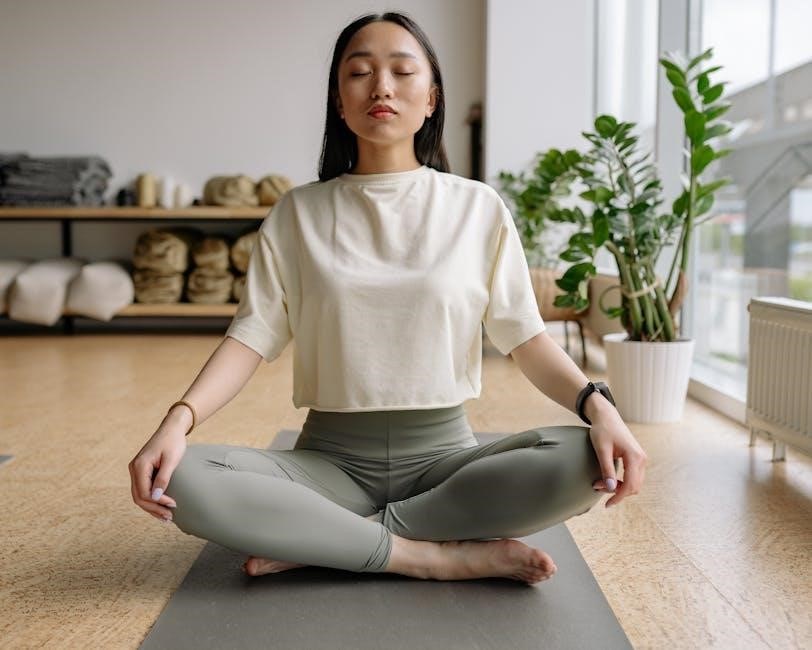
The seated Cat-Cow stretch is a gentle‚ yet effective‚ exercise for inclusion in a sitting leg exercise PDF‚ specifically addressing tailbone and lower back pain stemming from prolonged sitting. This dynamic movement improves spinal mobility and promotes relaxation‚ counteracting the stiffness caused by desk work. A detailed PDF guide should visually demonstrate correct form and breathing techniques.
To perform the stretch: Sit comfortably in your chair with feet flat. Inhale as you arch your back‚ drawing your shoulders back and lifting your chest – this is the “Cow” pose. Exhale as you round your spine‚ tucking your chin to your chest and drawing your belly button towards your spine – the “Cat” pose.
Synchronize the movement with your breath‚ repeating 5-10 times. The PDF should emphasize maintaining a relaxed jaw and shoulders throughout. Modifications‚ such as limiting the range of motion‚ should be suggested for individuals with back pain; Highlight the benefits of this stretch for improving posture and reducing stress. Include a disclaimer advising individuals to stop if they experience any pain‚ making it a safe and accessible exercise within the PDF.
Creating a PDF Guide for Sitting Leg Exercises
A well-structured PDF is vital for delivering accessible leg exercises. Include clear instructions‚ visuals‚ and modifications to cater to diverse needs and ensure effective implementation.
Essential Elements of a PDF Workout Guide
A comprehensive PDF guide for sitting leg exercises requires several key components. Firstly‚ a clear introduction explaining the benefits of these exercises – improved circulation‚ reduced discomfort‚ and prevention of chronic conditions like venous disease – is essential. Each exercise must have a dedicated section featuring a concise‚ step-by-step instruction list.
High-quality images or diagrams demonstrating proper form are crucial for user understanding and safety. Include modifications for varying fitness levels‚ acknowledging that some individuals may have pre-existing conditions or limitations. A warm-up and cool-down section should be incorporated to prepare the body and aid recovery.
Furthermore‚ a disclaimer advising users to consult with a healthcare professional before starting any new exercise program is vital. Consider adding a section on ergonomic setup to complement the exercises‚ addressing chair height and posture. Finally‚ a visually appealing layout and easy navigation will enhance the user experience‚ making the guide more accessible and encouraging consistent use.
Formatting for Readability & Accessibility
Prioritizing readability and accessibility is paramount when designing a sitting leg exercise PDF. Utilize a clear‚ sans-serif font like Arial or Helvetica‚ with a sufficient font size (12pt or larger) for comfortable reading. Employ ample white space – generous margins and line spacing – to prevent a cluttered appearance. Headings and subheadings should be logically structured and visually distinct‚ using bolding or different font sizes.
Bullet points and numbered lists are effective for breaking down instructions into manageable steps. Ensure sufficient contrast between text and background colors for users with visual impairments.
For accessibility‚ include alt text for all images‚ describing their content for screen readers. The PDF should be tagged correctly to enable proper navigation for assistive technologies. Consider offering a text-based version alongside the visually rich PDF. A logical reading order is crucial; test with a screen reader to verify. Finally‚ optimize the PDF file size for easy downloading and sharing.
Incorporating Images & Diagrams
Visually demonstrating each sitting leg exercise significantly enhances understanding and proper form. High-quality images or diagrams are essential; use clear‚ well-lit photographs or professionally designed illustrations. Show each exercise from multiple angles to illustrate the movement accurately; Include anatomical diagrams highlighting the targeted muscle groups to reinforce the benefits.

Consider using sequential images to depict the steps of each exercise‚ creating a mini “how-to” guide within the PDF. Annotate images with arrows or labels to pinpoint key body positions and movements. Diagrams can effectively illustrate concepts like circulation pathways or the impact of prolonged sitting on leg veins.
Ensure all images are appropriately sized and compressed to maintain a reasonable PDF file size. Always include descriptive alt text for accessibility‚ allowing screen readers to convey the visual information to users with visual impairments. Consistent visual style throughout the PDF is also important.
PDF Distribution & Sharing Options
Once your sitting leg exercise PDF guide is complete‚ consider various distribution methods to maximize its reach. Emailing the PDF directly to individuals is a simple option‚ particularly for colleagues or clients. Uploading it to a website or blog allows for broader access and potential search engine visibility. Utilize social media platforms – LinkedIn‚ Facebook‚ or health-focused groups – to share the resource with relevant audiences.
PDF hosting services like Google Drive or Dropbox provide shareable links‚ enabling easy distribution without direct email attachments. Consider creating a dedicated landing page with a form to collect email addresses in exchange for the PDF‚ building your contact list.
Ensure the PDF is optimized for online viewing (compressed file size) and mobile devices. Promote the PDF through relevant online communities and forums. Always respect copyright and licensing when sharing or repurposing content.